10 Ways to Fill Your Cup (& Show Up as Your Best Self)

“You can’t pour from an empty cup” has become such a cliché that it’s easy to scroll past it… right up until you hit that wall of exhaustion where even “fun” feels like effort.
Filling your cup is about restoring the inner resources that keep you feeling grounded, resourced and alive: your energy, hope, creativity, patience, compassion, motivation, focus, and sense of meaning. It’s not just about pampering or indulging in sweet treats; it’s about tending to your nervous system and your very real, un-ignorable human needs.
What does it mean to fill my cup?
Neuroscience and stress research show that when we face daily pressures, our bodies move into a stress response - increased heart rate, tense muscles, and racing thoughts. Even if the stressor ends (the meeting finishes, the email is sent), the stress cycle in your body isn’t automatically complete. You need certain kinds of experiences - especially movement, connection, and play - to help your body move back into safety and regulation.
So when we talk about “ways to fill your cup”, we’re really talking about:
Completing the stress cycle so your body can truly relax
Meeting your basic physical needs (sleep, food, water, movement)
Replenishing your emotional and mental energy
Reconnecting with what makes you feel alive and “you”
Filling your cup is not selfish. It’s what allows you to show up for your people, your work, and the world from a place of wholeness rather than resentment, numbness, or burnout.
What’s a self-care menu?
When you’re depleted, it can feel impossible to answer the question, “What do I actually need right now?”
That’s where a self-care menu comes in.
A self-care menu is a personalised list of practices and activities that help you (specifically, you!) feel more rested, nourished, and grounded. Think of it like a café menu for your wellbeing: when you’re low on energy, you don’t have to invent self-care from scratch – you simply choose from options you’ve already thought through.
Many therapists and coaches now use self-care menus with clients as a practical tool to prevent burnout and support ongoing mental health. Some even organise them like a restaurant: quick “starters” you can do in 5 minutes, “mains” that take more time and attention, and “desserts” - those deeply nourishing things you don’t do every day but that feel luxurious when you do.
For your self-care menu, you might organise it by:
Time: 5 minutes, 15 minutes, 1 hour, half a day
Energy: low, medium, high
Theme: movement, connection, rest, creativity, nature
As you go through the following ways to fill your cup, notice which ones could go on your own self-care menu and in which category.
Here’s a FREE self-care menu worksheet that’ll help you get started!
Start With The Basics
Before we dive into new ideas, it’s worth naming something that often gets missed: a lot of what gets packaged as “self-care” is actually basic human maintenance.
Things like:
Sleep: enough of it, at roughly consistent times, and good quality where possible
Nutritious food: eating enough, regularly, with real nourishment rather than only quick fixes
Water: drinking enough, ideally decent-quality water throughout the day
Supportive relationships: people you can be real with, with some sense of psychological safety
Movement: not punishing workouts, but some form of active movement that feels good to your body
If you’re feeling utterly depleted, it’s wise to check these basics first. Where is the simplest lever? Can you go to bed 30 minutes earlier, add a snack so you’re not running on empty, refill your water bottle, or consciously reach out to someone you feel safe with?
Then consider what kind of rest you actually need:
Physical rest: sleep, naps, lying down, a soak, going to the hammam/sauna, letting muscles soften
Mental rest: a walk without devices, reading a cosy fantasy book, playing a gentle game, sitting in a park with no agenda
Once that foundation is there (or at least in progress), the following practices become truly nourishing rather than just another “thing you’re trying”.
1. Make your me-time non-negotiable
One of the most powerful ways to fill your cup is to turn your “if I have time” into “this is just what I do”.
Me-time doesn’t have to be long or dramatic. It might look like:
15 minutes in the morning before you open your phone
A quiet cuppa after work where no one gets your attention but you
A weekly date with yourself - a bath, a café, a creative outlet
The key is non-negotiability. Treat this time like you would a call with someone you deeply respect: you don’t casually cancel it every week.
You might experiment with:
Putting it in your calendar as an actual appointment
Telling a partner or friend: “This half hour on Wednesdays is my recharge time”
Creating a simple ritual - same drink, same chair, same candle - so your body learns, “Ah, this is for me and this is safe”.
If you love community and embodied work, your me-time might occasionally be a workshop just for you - for example, a dance-based space like Empowerment through Embodiment or Dance your Purpose, where movement and reflection help you come back to yourself. That’s me-time too: you’re not performing for anyone, you’re tending to your precious inner world.

2. Prioritise practising better health habits
You don’t need a perfect wellness routine. You need tiny shifts that you can actually sustain.
Rather than trying to overhaul everything at once, choose one or two health habits that are most likely to refill your cup:
Going to bed 20–30 minutes earlier
Adding one portion of fruit or veg to a meal
Carrying a water bottle and sipping on it throughout the day
Doing a 5-10 minute stretch or walk most days
Research on burnout and wellbeing consistently shows that tending to these “boring basics” dramatically reduces symptoms of stress, exhaustion, and emotional overwhelm over time.
You might try:
Habit stacking: “Right after I brush my teeth at night, I fill my water bottle for tomorrow.”
Lowering the bar: Instead of “I’ll cook healthy meals every night”, choose “I’ll add something green to my plate most days.”
Being kind to yourself, not punitive: If you miss a day, that’s data, not failure. You’re learning what works in your real life. It can feel hard, but remember to give yourself grace and self-compassion.
Remember: health habits are not a moral scorecard. They are simply ways to give your body the stability it’s craving.
3. Build a comfortable, safe environment (however you can)
You don’t need an Instagrammable home or a highly curated aesthetic to feel safe and soothed. You need pockets of comfort and safety that signal to your nervous system: “It’s okay to exhale.”
Ask yourself:
Where in my home do I feel most relaxed?
What small changes would make my space feel 5-10% more supportive and nourishing?
Simple ways to fill your cup through your surroundings:
Clearing one tiny surface (your bedside table, your desk, your coffee corner)
Creating a “cosy corner” with a blanket, soft lighting, and your favourite mug
Adding something living - a plant, some herbs, fresh flowers when possible
Using scent: essential oils, incense, your favourite tea brewing
If your home doesn’t feel safe or fully yours, try to think creatively about micro-environments: a particular café, a library nook, or a park bench that becomes your regular “safe spot”. Your nervous system remembers safety spots; visiting them regularly can be subtly regulating.
4. Keep a gratitude journal
Gratitude isn’t about denying hard things or pretending everything is fine. It’s about teaching your brain to notice the positives that are also true, alongside the stress and struggle.
A gratitude journal can be beautifully simple:
Each day, list just 3 things you’re grateful for
Focus on small, concrete details: “The way the light hit the leaves on my walk”, “First sip of hot tea”, “A silly meme a friend sent”
If you’re exhausted, try “micro-gratitude”: one sentence about something that didn’t go wrong today
Regular gratitude practices have been linked with improved mood, increased optimism and greater resilience in the face of challenges.
You might even eventually weave gratitude into existing routines:
At dinner: each person shares one thing they appreciated about today
In bed: mentally list 3 things before you go to sleep
In your journal: pair gratitude with a gentle check-in - “What am I proud of myself for today?”
This isn’t about forcing positivity; it’s about gently balancing your brain’s natural bias for scanning for danger. Also, keeping a journal also has movement benefits!
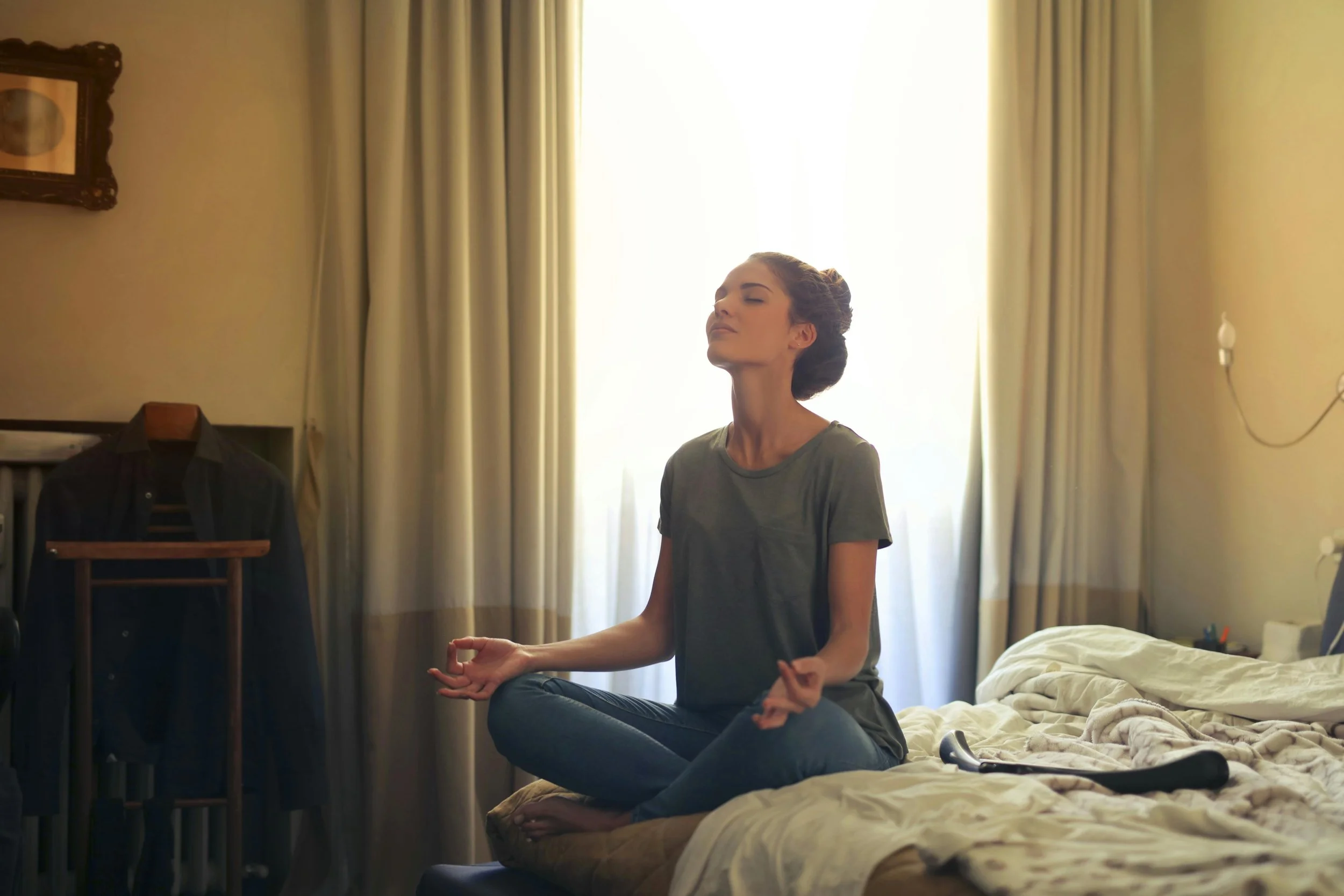
5. Meditate every morning
Morning meditation doesn’t have to be long, spiritual, or complicated. Think of it as a daily nervous system reset - a way of starting your day from a steadier baseline, so your cup doesn’t drain quite as quickly.
Options for a gentle morning practice:
2–5 minutes of breath awareness – noticing the inhale and exhale
Body scan in bed – feeling the weight of your body on the mattress, relaxing your jaw and shoulders
Compassion meditation – placing a hand on your heart and silently saying, “May I meet today with kindness, self-compassion, and optimism”
Even very short practices, done consistently, can reduce stress and support emotional regulation.
If sitting still feels impossible, consider moving meditation: slow stretches, a few mindful yoga poses, or a short walk where you simply focus on your feet and your breath.
And if you have no idea where to start with meditation, stretching, or yoga, YouTube is an amazing resource for finding free, high-quality instruction!
The goal is not to clear your mind. It’s to meet your mind with openness and curiosity instead of judgement and shame, and to give yourself a tiny pocket of intentional presence.
6. No screens in bed
One surprisingly powerful way to fill your cup is to protect your sleep like a dragon guarding its treasure.
Screens in bed, especially scrolling late into the night, tend to:
Delay bedtime (“just one more reel…”)
Expose you to blue light that drastically interferes with melatonin and sleep quality
Flood your brain with stimulation and comparison right when it needs to wind down
If you can, experiment with a no-screens-in-bed rule (or at least a no-scroll rule). Instead, your bed should become associated with:
Sleep and rest
Cuddles and gentle touch (with yourself, a partner, a pet or even a weighted blanket)
Cosy reading - novels, gentle essays, poetry
If a full ban feels unrealistic, try:
Setting a “digital sunset” time, ideally 30-60 minutes before bed
Charging your phone outside the bedroom
Using an actual alarm clock instead of your phone
Better sleep is one of the most underrated ways to fill your cup. It makes every other habit easier. Trust me on this! When I experienced burnout in 2022, developing better sleep habits was key to healing.
7. Do at least one thing a week that brings you pure joy
Many of us have internalised the idea that activities need to be productive, impressive, or at least “self-improving” to be worth our time.
Your cup, however, is deeply nourished by play for play’s sake - activities where there is no output, no metric, and no audience. Just you, being a human who gets to enjoy things.
Ask yourself:
What did I love doing as a child or teenager, before I worried about being good at it?
What feels a tiny bit “pointless” but makes me feel light, silly, or deeply content?
Your joy menu might include:
Dancing around the living room to your favourite playlist
Painting or drawing badly on purpose
Baking, crafting, gaming, or pottering in the garden
Going to a dance-based workshop like Empowerment through Embodiment or Dance your Purpose, where movement is about non-judgemental exploration, not performance
Workshops like Get Grounded, where the focus is on creative, playful engagement with your body and inner world
From a nervous system perspective, play is not frivolous. It’s one of the core ways we complete the stress cycle and remind our bodies that life isn’t only about survival.
So yes, schedule joy. Put it in your calendar. Protect it. Let it be unapologetically “non-productive”.
8. Reach out to friends and family you enjoy talking to
When you’re low, it can feel easier to withdraw than to socialise, and sometimes that’s exactly what you need for a while. But very often, one of the most effective ways to fill your cup is connection.
Not connection with anyone and everyone. Connection with people who:
Make you feel more like yourself
Leave you feeling energised or gently soothed, not drained
Can hold space for the real stuff, not just the highlight reel
Simple connection practices you can engage in:
Sending a low-pressure voice note: “Thinking of you, no need to respond quickly.”
Scheduling a regular phone or video call with a close friend
Popping by to chat with a neighbour
Doing something meaningful together - like attending a workshop such as Circling Home or Whispers from Within with a partner, friend, or family member, so you can deepen your connection and emotional safety
Studies on well-being repeatedly show that the quality of our relationships is one of the strongest predictors of our mental and physical health over time.
If reaching out feels vulnerable, start tiny: reply to a message you’ve been sitting on, send a funny meme, or simply write “Hey, I miss you” to someone you trust.
9. Go for a walk and look for glimmers
A brisk walk is one of the most accessible, research-backed ways to help your body complete the stress cycle: it activates your muscles, supports circulation, and tells your nervous system that you’re moving out of “threat” and back towards safety.
To turn a walk into a genuine cup-filling practice, I recommend adding glimmer hunting.
“Glimmers” are those simple moments that make your system soften - tiny cues of safety, beauty, or delight. On your walk, you might look for:
Interesting textures or colours - the way moss grows on a wall, the clouds as they move
Sounds that soothe you - leaves rustling, birds, distant chatter
Signs of kindness - someone holding a door, kids laughing, a dog being adored
You can make it a mini-game:
“I’ll name 5 things I can see, 4 things I can touch, 3 things I can hear…”
“I’ll take one photo of something that feels like a glimmer and look at it later when I feel stressed.”
This is a gentle, embodied mindfulness practice; your attention comes out of the swirl of thoughts and anchors into the present moment, which often feels much more manageable than your mind’s catastrophic future spiraling.
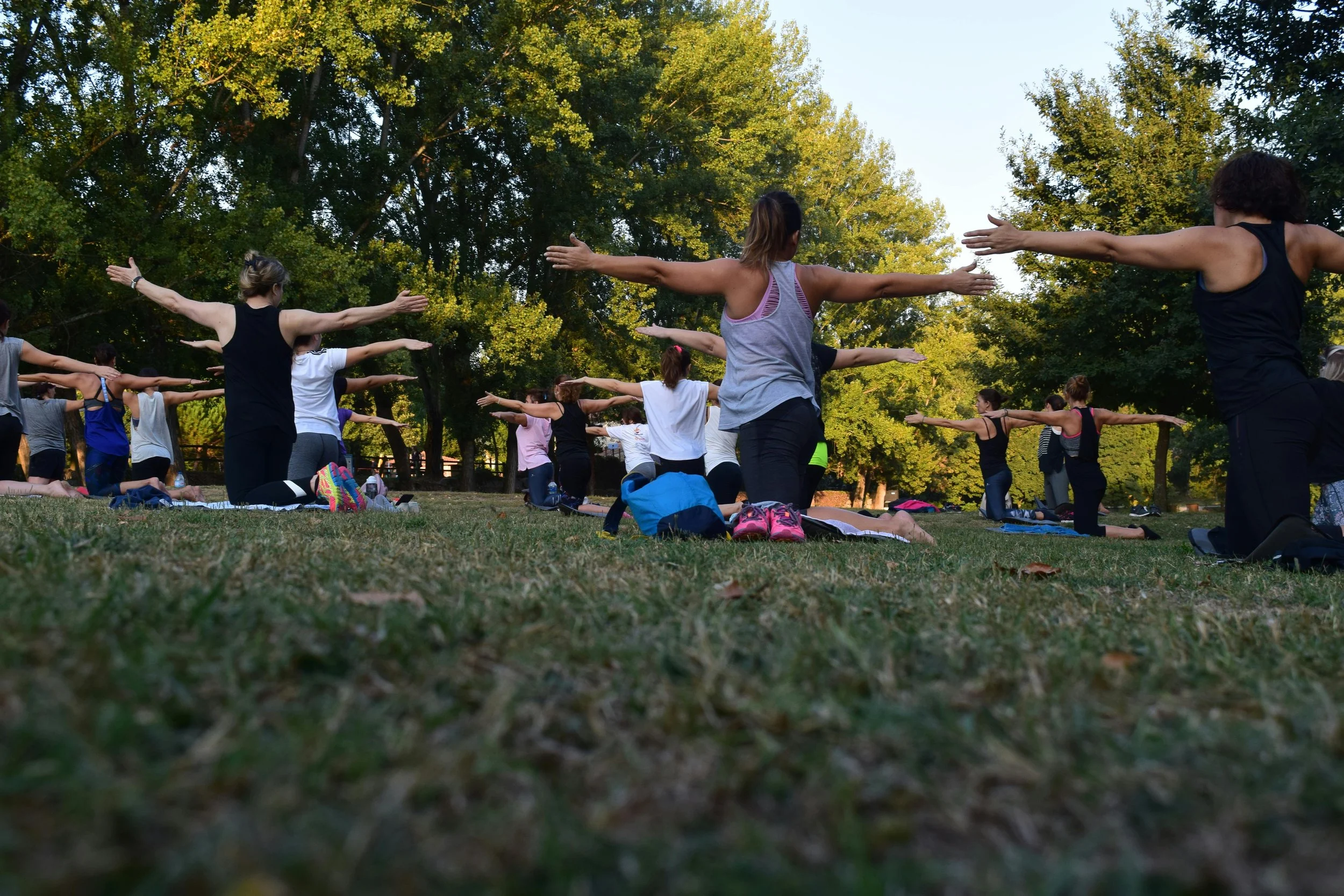
10. Do a beginner’s yoga class (if not in-person, YouTube it!)
Yoga can be a beautiful way to bring together many of the elements that fill your cup:
Movement - stretching and strengthening
Breath - helping regulate your nervous system
Presence - tuning into the sensations of your body
Rest - savasana at the end as a mini-reset
You absolutely do not need to be flexible, slim or spiritual to benefit. Yoga for beginners can look like:
A short YouTube video in your pyjamas
Chair yoga if standing is tricky
A gentle restorative or yin class in your local studio
Using props - cushions, books, blankets - to support your body
If you feel more drawn to freer movement, you might pair or alternate yoga with dance-based spaces like Dance your Purpose, which is still movement, still mind–body connection, but with more play and expression.
The real intention is to get curious about what your body needs and feels, rather than treating it as a machine to drag through the day.
How can I make self-care a habit?
Knowing all these ways to fill your cup is one thing. Actually doing them regularly is another. Practising them on a regular basis is often the toughest part.
Here are some gentle, realistic strategies:
1. Build your self-care menu
Remember the self-care menu we discussed earlier? Using the ideas above (and your own), create a self-care menu that works for your life. Many practitioners suggest organising it by time and energy, so you can quickly choose something that fits your current state.
For example, as a reminder:
5 minutes, low energy: drink water, stretch your neck, step outside, and notice the sky
15 minutes, medium energy: journal, call a friend, do a short meditation, or yoga video
1 hour, higher energy: beginner’s class, deep clean one area, creative hobby
Half day/full day: a mini solo retreat, a hammock and book afternoon, a workshop
Keep this menu somewhere visible: on your fridge, in your notes app, or next to your bed.
2. Attach self-care to existing routines
Habits stick more easily when we attach them to something we already do. For more on the science behind this, I recommend reading Atomic Habits by James Clear.
You can say to yourself:
“After I make my morning drink, I sit for 3 minutes with my breath before I check my phone.”
“After I finish work, I walk around the block once before I start making dinner.”
“After I get into bed, I write down 3 gratitudes.”
These are called “implementation intentions” - clear, simple “When X, then I do Y” statements. And even if you don’t always stick to them, at least you know your intentions and can keep working towards your goals.
3. Choose “good enough” over perfect
Your self-care will not, and does not need to, look like anyone else’s. Some weeks, filling your cup will look like a full day offline and a long bath. Other weeks, it will look like drinking more water, turning your phone off 20 minutes earlier, and texting a friend.
Don’t compare your routines, habits, or productivity to others! Trust me, that doesn’t serve anyone, especially you.
“Good enough” self-care, done consistently, is far more powerful than occasional, elaborate “perfect” self-care you struggle to fit in.
4. Let movement, connection, and play guide you
When you’re not sure what you need, come back to these 3 core practices rooted in neuroscience:
Move your body: a brisk walk, dance, stretch, yoga (supporting completion of the stress cycle
Connect: with a friend, neighbour, loved one, or community space
Play: do something creative or fun simply for the joy of it, not for an outcome
You might even ask yourself:
“Which of these 3 have I had the least of this week: movement, connection or play?”
Start there.
How do you know when you need to fill your cup?
Sometimes the signs are obvious - you’re exhausted, tearful, or snapping at everyone. Other times they’re more subtle and more difficult to pick up on.
You may need to consciously refill your cup if you notice:
You feel irritable over small things that wouldn’t usually bother you
You’re doom-scrolling more and struggling to step away from your phone
Rest doesn’t feel restful - you wake up still tired
You’ve lost interest in things you used to enjoy
You feel numb, detached, or like you’re watching your life from the outside
You’re more forgetful, scattered, or overwhelmed than usual
Burnout research describes this as emotional exhaustion, cynicism, and reduced sense of efficacy. In everyday terms, that might feel like: “I’m tired all the time, I care but I also don’t, and nothing I do seems to matter.”
When you recognise these signs, that’s not proof you’re failing. It’s your system waving a flag: You’ve been giving a lot. It’s time to receive.
You might:
Check your basic maintenance (sleep, food, water, movement, supportive contact).
Identify what kind of rest you most need - physical or mental.
Choose one small practice from your self-care menu that you can do today, even if you don’t feel like you “deserve” it yet.
There are many, many ways to fill your cup. You don’t have to implement all of these at once. In fact, please don’t. That may be overwhelming and that’s the last thing I want for you!
Instead, you might:
Pick 1 idea from this list that feels light and easily doable
Add to your self-care menu
Experiment with different practices for a week or two, with as much self-compassion as you can muster
Remember that you are not a machine that needs to be optimised; you are a living being who deserves care, softness, and space to breathe.
Your cup does not have to be overflowing every day. But it does get to be more than empty.

Hi there, so lovely that you're here! Looking forward to connecting with you. - Nora
